
EXIT stories with Dominic Gagnon (Connect&GO)
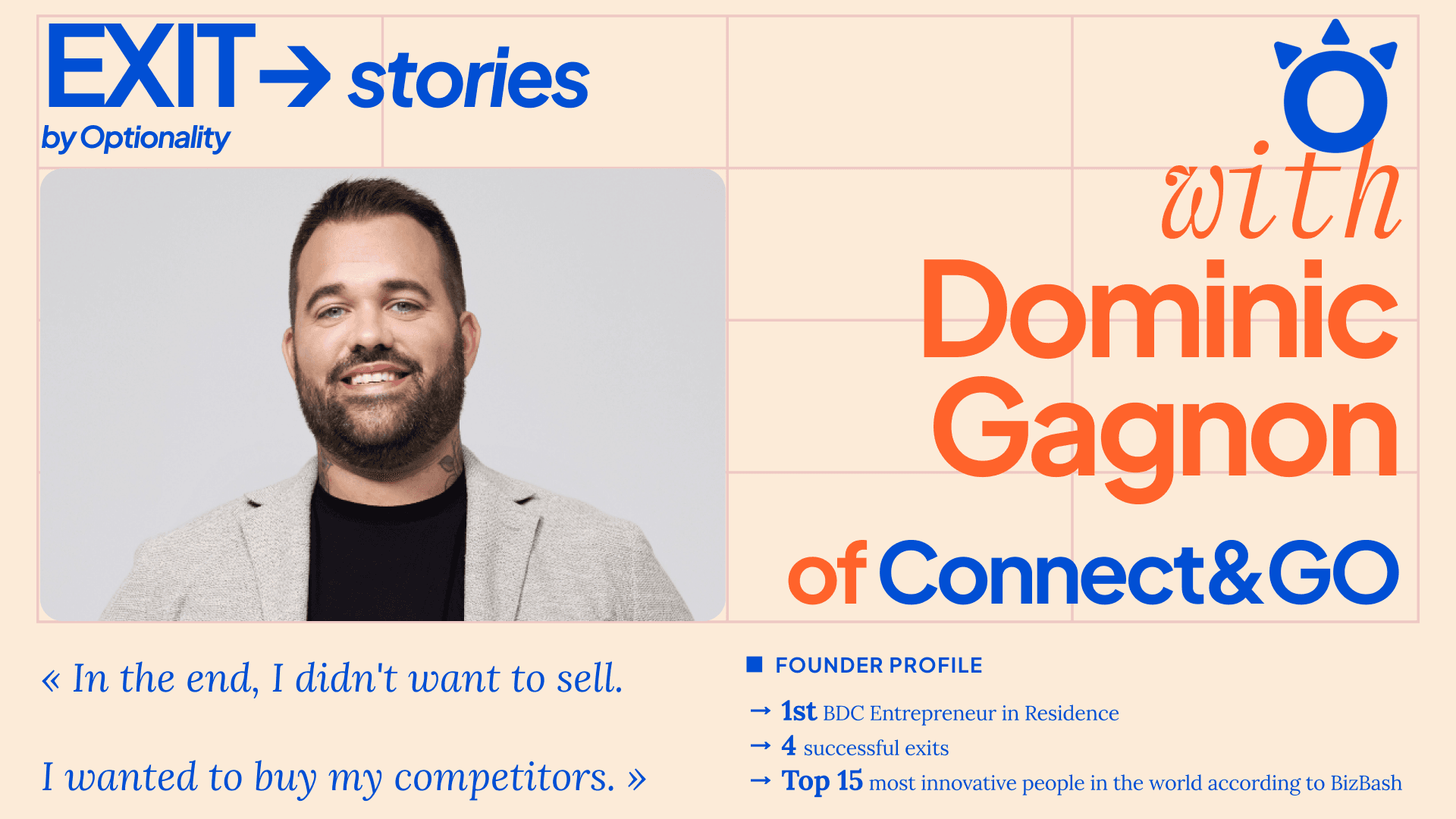
Lessons Learned From Selling Connect&GO to Peek
For our third EXIT Stories, I sat down with Dominic Gagnon: serial entrepreneur, author, and, as of a few months ago, an advisor to Optionality.
Dominic has built and sold several companies. The latest, Connect&GO, was acquired by Peek, a U.S. travel tech platform backed by major institutional investors and prominent tech veterans, including WestCap, Goldman Sachs Alternatives, Springcoast Partners, Jack Dorsey and Eric Schmidt, in November 2025.
Dominic does not sugarcoat. He talks about the wins and the wreckage with the same candor, which is the whole point of EXIT Stories: the real story, scars included.
Here is what he shared.
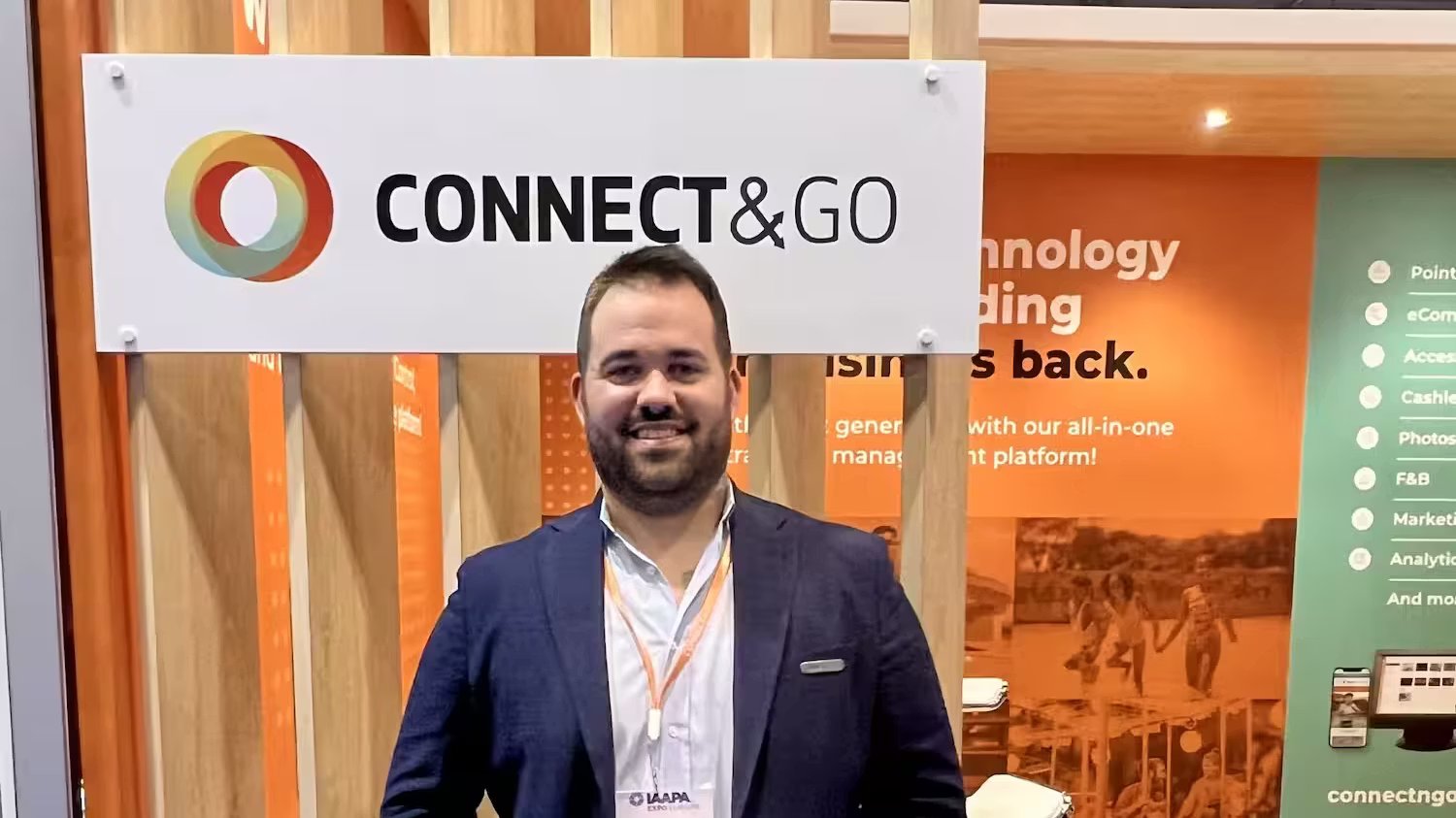
The making of the transaction
Dominic’s path started young. By his early teens, he was a self-taught hacker. A story that, by his own telling, briefly involved a visit from the police at his parents’ house when he was still a teenager, and by 16, he had built and sold his first company.
He is candid that the road since has not been a straight line. An earlier venture, Piranha, ended in personal bankruptcy after the company suffered a fraud of more than $1 million committed by the person responsible for its finances. That scar shaped how he approached every deal that followed. It also later pushed him to write openly about entrepreneurship and mental health.
Connect&GO grew out of that agency world. The first client was Stade Saputo, which, alongside the agency Bleu Blanc Rouge, wanted to create a connected stadium experience. From there, the company moved into festivals, where its RFID and cashless wristbands solved a very real problem: access-control fraud.
And yes, sorry to everyone who used to pass wristbands through the fence at events.
That problem became the starting point for a much larger company. Connect&GO went on to work with some of the biggest stages in the world: Osheaga, two NFL Super Bowls, and two Olympic Games. For the Super Bowl, the team even built a semi-permanent payment tattoo with US Bank and Visa.
For its first six or seven years, Connect&GO was bootstrapped and profitable, generating around $1 million in profit. Oddly, that profitability became a problem when the founders went looking for investors.
At the time, capital was almost free. Startups were encouraged to grow faster by burning capital, not by preserving it. Investors rewarded speed, market capture, and aggressive expansion. Profitability was often treated less like discipline and more like a lack of ambition.
They kept telling us they didn’t understand why we were profitable.
Investors also questioned the quality of the revenue. Project-based events, even multi-year festival contracts, did not read as recurring. That feedback forced the team to think differently about the future of the business.
From events to attractions
The company had already started exploring the attractions market before the pandemic. In 2018, Connect&GO made its first acquisition in the sector, followed by Dator in 2019. The logic was already there: the closest thing to an event that also produced more predictable revenue was an attraction that opened and closed every day.
But the real decision to focus entirely on attractions came later, and it came under pressure.
A few months after raising $5 million, the pandemic wiped out 98% of Connect&GO’s revenue. Events disappeared overnight, and nobody knew when they would come back. A ticketing company they had bought for $1.2 million was resold months later for $60,000. They burned through the first $5 million in roughly a year.
That is when Dominic and the team made what he calls one of the hardest decisions in the company’s life. They stopped trying to protect the business they had built and focused on the business they believed could survive and scale.
Courage isn’t always doing something new. Sometimes it’s stopping what you were already doing so you can focus on the right thing.
Instead of retreating, Connect&GO doubled down on attractions. While much of the market froze, the company bought small competitors cheaply and rebuilt itself as an attraction management platform.
In about four years, the company went from zero to close to $10 million in recurring revenue, processing close to half a billion dollars in transaction volume across parks and attractions around the world.
Three scenarios: build, buy, or sell
Here is the habit that made Dominic’s eventual exit possible.
At every board meeting, he presented three options: refinance and grow organically, acquire competitors and consolidate, or sell.
He kept all three alive at once.
To keep the third one real, he started talking to potential buyers years ahead. Through “Capital Market Days,” a kind of speed dating with private equity, he met funds in back-to-back fifteen- and twenty-minute sessions.
You sit across from a fund, and in fifteen or twenty minutes you know whether there’s a fit.
Over time, he built relationships with more than 280 potential buyers, with roughly fifty getting a regular update. He even wrote to at least twenty businesses a year saying he wanted to buy them, sometimes purely to gather market intelligence.
This was optionality in practice before it became a product or a framework. Dominic was not waiting for a transaction to begin before learning the market. He was building relationships, testing appetite, understanding valuations, and keeping paths open long before he needed them.
Going to market
A first process, run with a banker chosen mostly for understanding the niche, produced an offer.
The investors chose not to sell, preferring to fund acquisitions and build a local champion, and gave Dominic access to capital for M&A. Dominic walked away from that first offer.
He can price the decision precisely: the same buyer that eventually acquired the company had offered several million dollars more in that first round.
Then the SaaS market turned. Capital tightened, his lead investor pulled back from deploying more, and the company cut deeply to protect profitability, even unwinding acquisitions that were a week from closing.
Dominic, who controlled the board, decided it was time. He restarted a full process.
The second time, he ran much of it himself. He had grown to love the negotiation, and he had tested his bankers and found them, in his words, short on persistence. Working solo against far larger counterparties, he pushed the deal through.
He is the first to say it is not advisable.
A deal has to die three times before it can go through.
This one did. There were bluffs, a week of radio silence, and a final text that reopened the talks.
Why Peek
Dominic had mapped more than two hundred potential buyers in his niche.
Peek was not one of them.
It came through a referral from a private equity firm.
That alone is an important lesson. The best buyer is not always the obvious one. It may not be on your list. It may come from a relationship, a conversation, or a door you kept open years earlier.
But once the discussion started, Peek quickly stood out.
Peek did what Connect&GO did, but for smaller attractions, with thousands of clients, a strong product, and a deep roster of backers. More importantly, the vision made sense. The product direction was aligned. The management team was impressive. The investors understood the category. The combined company had a real chance to become something much larger than either business could have been alone.
For Dominic, this mattered.
A sale is not only a financial decision. It is also a decision about where the company, the team, the product, and the mission go next.
At roughly $10 million in revenue, Connect&GO was too small to be a private equity “platform,” and Dominic did not want to be the “add-on” whose team gets absorbed. Peek offered a path to keep building, with the right product, the right vision, the right leadership team, and the right investor base.
It was not just an exit. It was the best company to join.
What the headline never shows
Dominic is blunt that a sale price is a headline, not the number you take home.
Between cash at close, vendor notes, earn-outs, and stock, the announced figure and what lands in your account can be very different.
The detail he insists founders miss most:
Valuation isn’t really what matters. The liquidation preference changes everything.
He had made dropping his lead investor’s liquidation preference a condition of the deal.
Had it stayed, he estimates he would have kept a small fraction of what he did.
He points out that a large share of venture-backed companies sold after a Series B return nothing to the founder once preferences are paid.
And the timing lesson, learned the hard way:
Cash doesn’t exist until it’s in the bank account.
The first offer was strong partly because his investor wanted him to stay, which gave Dominic the leverage to say no.
The second time, with only months of runway, he negotiated from weakness, and he estimates it cost him around $15 million.
Lessons for founders
Build relationships with buyers years before you sell.
Regular updates, even cold outreach to gather intelligence. The best buyer may not be on your list at all. Peek wasn’t.Keep three options open: refinance, acquire, or sell.
Optionality is what gives you both negotiating leverage and an honest read on your value.Negotiate from strength.
Runway and alternatives are leverage. Selling from weakness, by his own estimate, cost roughly $15 million. And cash isn’t yours until it clears.Read past the headline number.
Cash, paper, vendor notes, earn-outs, and especially liquidation preferences decide what you actually keep. A high valuation sitting on top of a heavy preference can leave the founder with almost nothing.Be realistic on value.
Bankers may quote 30% to 40% above what the market will pay to win the mandate. Pressure-test the number.Don’t let the process defocus the business.
M&A pulls the team’s attention, results dip, and a dip invites a lower last-minute offer. Carve out people to keep operating while others run the deal.Bring your team onto the cap table, and prepare for after.
Dominic brought his leadership in as shareholders, several writing their own cheques. It changed how the company pulled together through its hardest stretch. He is also candid that the period after a sale is harder than founders expect: a smaller role inside someone else’s company, a culture you no longer control, and a real emotional drop once the goal you chased for years is suddenly gone. Plan for it as deliberately as you plan the deal.
A real thank you to Dominic for telling it straight, the wins and the scars both.
Simon Leroux
President, Optionality